

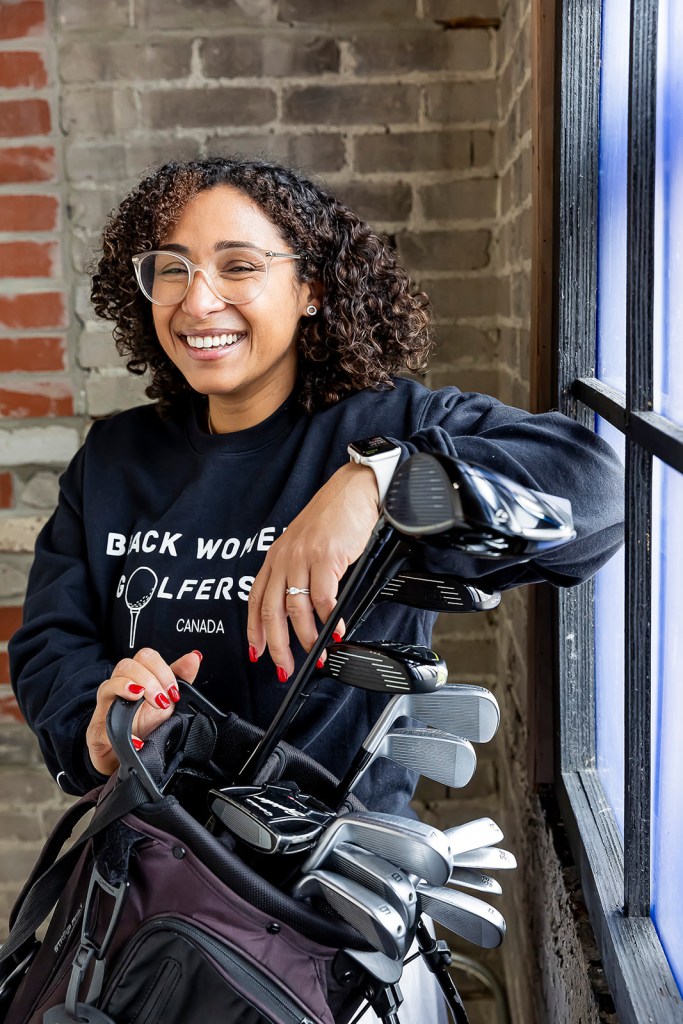
Who is Amaya Athill and what are you most passionate about?
I am Antiguan; I was born and raised in Antigua and Barbuda. That’s where I’m from -it’s my heart, my home, and where my family is from. My Antiguan identity is the first thing I connect with, and it means even more now that I live in a different country. I carry that identity with me everywhere. While I’m very proud of being Antiguan, I tend to lose my accent immediately after leaving the island. However, I am still deeply rooted in that identity.
Additionally, I am the only daughter of Anne Marie Fisher and Anthony Athill. Between them, they have a total of 24 siblings, with both of my parents being the second youngest in their large family. They come from a background of not having a lot growing up, coming from large families, and wanting to have one child. They wanted a daughter and they wanted to name her Amaya. Growing up I did not know what I wanted to be. There is a full circle moment when I look back now, in which the only things I can remember loving were geography and golf. Geography got dropped off the board. The only sport I grew up loving was golf.
My dad was an entrepreneur, and his mentor, Charlie Shoul, encouraged him to learn golf because it’s good for networking. It was so beneficial for my dad’s business that he wanted me involved in the sport. At five, he introduced me to the game, and I grew up playing. Being from the family that I’m from, my dad and my mom did not know how to help me navigate applying for golf scholarships when the time came. I could not maximize scholarships and other opportunities even though I had travelled, competed, and had a long resume of playing throughout the Caribbean.
I ended up going to the UK to study law. I started practicing litigation, but my interest and passion have always been for human rights. I was constantly involved in public education about human rights matters. I had a radio show in Antigua called ‘In Chambers’ for a little while, where we broke down different legal concepts like family law, corporal punishment, etc. so a lot of what I’ve done and what makes me who I am, is about kind of imparting information that I have learned, and caring a lot about people having access and having equity. A long way of saying that what makes me is my Antiguan-ness, my parents’ journey, and where they were able to push me on my path and my love and care for issues of education and access.
What is one of your most vivid memories of playing golf as a child in Antigua?
This is going to sound horrible being shouted at by some of the members on that golf course. (laughs)
I have some good memories. One of the first times I went to a junior golf lesson, I met one of my best friends in golf. Her name is Helyne Joseph. I remember meeting her and I was like, my name is Amaya and she was like, my name is Helyne. I asked her how old she was and she was four. I remember telling her that I was five. That was it we were best friends. Another vivid memory would definitely be about golf etiquette which is hard to learn and people use their privilege in ways to bully other people because they are either more aware of the rules or they flaunt the rules, or they just are mean people and pretend like you’re doing something wrong when you’re not. I won’t call any names, but there was a very well-known lawyer at the time, who told me and Helyne one day that we were moving too slow and started shouting at us. I will never forget that, because it we were not moving slowly and even as a child it felt unfair. What are you doing? Why are you shouting at kids? That’s another vivid memory, because those moments stick with you.
We used to travel once a year for the Eastern Caribbean Golf Association (ECGA) Championships, which were hosted in a different country each year. Every time we travelled, we met up with other golfers from other islands, and we competed, and I would always fall apart. I am not a competitor. Don’t put me in a competitive space. I cannot mentally or emotionally handle it. Don’t do it.
I have one more. It’s not really a memory as such but I would spend almost every afternoon and every single weekend at the golf course. I had two coaches at the time. Bobby, who still works at the golf course, Richard Goulet, who was a retired Army vet from the US who was living in Antigua. Every day they would give us drills and skills to work on. I attribute to my golf swing and my golf knowledge from the many hours and reps I put in as a child.
You are one of the founding members of Black Women Golfers. Can you share a bit of your of the motivation behind starting that organization?
Growing up playing golf in Antigua, I felt like I belonged in the sport. I always have to caveat that by saying it came with a lot of privilege that I could have golf as my sport growing up. As much as Cedar Valley Golf Course is accessible, it doesn’t always feel comfortable for people. As a young person, everybody around me was Antiguan, Kittitian, Saint Lucian, and the young people weren’t white. We were all black folks. So, it didn’t feel like I didn’t belong. The associations were also made up of black people from the Caribbean. I had no question that this sport wasn’t for me.
I moved to the UK in 2019 and the pandemic hit in 2020, I hadn’t really been playing golf that much before that. I kind of gave it up. I did it for fun, but I wasn’t into it as hardcore as I used to be. When the pandemic hit, I decided to pick back up my clubs because I needed a hobby. I needed to get out of the house, and I rocked up to a golf course in the UK, I was like, whoa! They were not friendly. They were not welcoming. There was nobody that looked like me. Not the cashiers at the pro shop. Not on the course, not anywhere in the parking lot. Nobody! Nobody! It was a little intimidating because I’ve never been put in a space where I am only playing with white folks, and there’s nobody that I can identify with. Afterward, I did a lot of research and found a group called the African Caribbean Golfers Association. Bajan men who moved from playing cricket in Barbados to playing golf because cricket is hard on the body. They have a 40-year legacy of playing together. The Association also included women. I found my people! I would play with them once a month, and I had my local club where, again, there were no black women, but it was my space to play.
I kept feeling that there’s so much space for other women, black women that look like me in the sport and that I wanted to do something. My mentor was putting on an intro to golf sessions for black women in Birmingham, Manchester, and she called me one day and she said, ‘if you’re so interested, why don’t you do one in London?’ I was like, done! I immediately called up a golf course, found a coach and put it out on my Instagram. I called all of my friends who I knew had been interested in playing but didn’t know where to start. Within two weeks, I put on an event and 20 women came. They learned golf and they loved it. We socialized at the end and they asked all the questions about golf and had a fantastic time. At the time, I just made a major career change from civil litigation to working in an international organisation, and a light bulb went off in my head like, whoa! I love this. I liked seeing their faces light up when they made contact with a ball. It fed every single passion that I had when I was in Antigua. You know, every passion that I had for human rights, equity, access, having conversations that educate. It just met all of my needs. It also made me feel a purpose that I previously had in law, but had kind of lost track of because I’m starting this new career.
In 2022 I moved to Canada and I knew nobody in the country, not a soul. I had also decided to leave law for the time being and I took up a role at Golf Canada, which is, ironically involved doing exactly what I had found a passion for the in the UK, except in this role I was working with female junior golfers. I don’t ever want someone to feel the way I felt that one day in the UK, going to that golf course like I don’t belong.
I restarted in Canada, did all the research, found another group, Caribbean Canadian Amateur Golfers Association. Again, a bunch of Bajans who moved to Canada. It is incredible that these groups have such a similar history and have no idea about each other. In 2023, um, I brought together all the women from that group to start doing meetups. We loved each other’s company but I wanted to make the group. I founded black women golfers and started hosting Intro to Golf clinics. I want black women to feel a sense of belonging in this sport, because there’s not enough of us out here and there’s a reason for that.
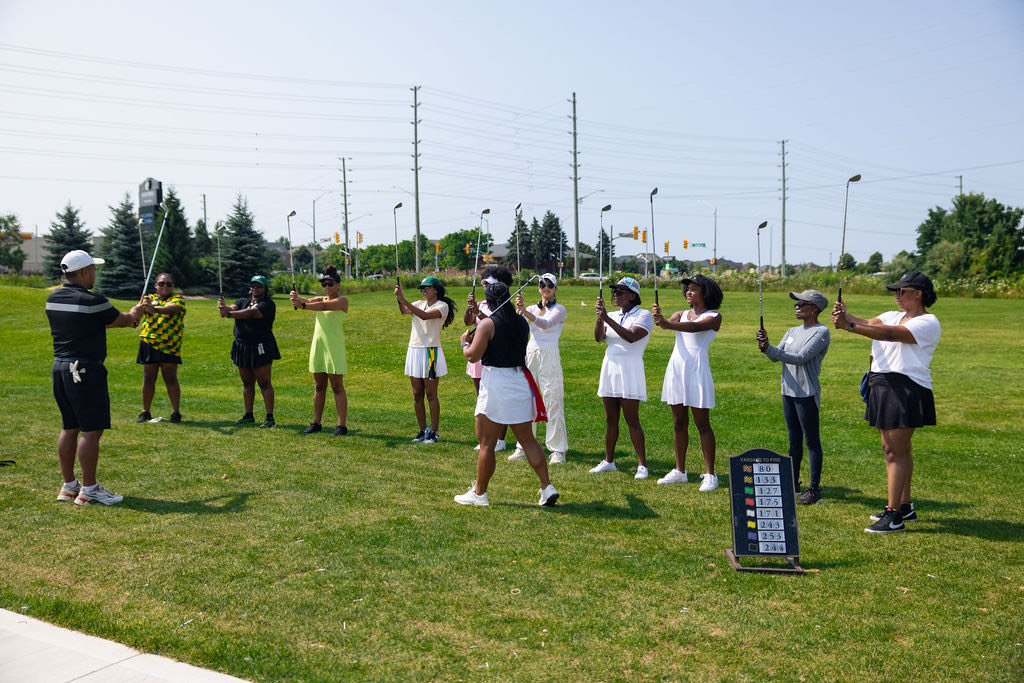
What do you think that reason is?
Lack of information about how to access the sport and the expense to access the sport. If you do not know how to access it in a way that is affordable for you, it will be more expensive than it needs to be. Also not seeing themselves in it. If you do not see yourself there, how on earth are you going to feel like I should feel motivated to access it? So, intimidation, cost, lack of information or access to information and representation?
Let’s go back for a moment. The golf clinic you hosted in the UK with the 20 women, was that a one off or did you host several clinics?
It was one clinic. The idea for the clinic came at the end of my first golf season golfing again and it was cold. I am a fair-weather golfer. A lot of people can play in the winter in the UK. I am not that girl. If you’re below ten degrees, you are not seeing me on that golf course. If you are raining, you are not seeing me on that golf course. I didn’t host anything after that and I left six months after.
If you are willing to share, can you speak a bit about what made you stop playing golf?
I got a partial scholarship offer to go to Duke, but my parents still couldn’t afford the difference. I moved to the UK to do my A-levels because I am also a British citizen and qualified for a student loan. In the UK, they do not have collegiate golf programmes, like the US. I was studying in central London and my college did not have a sporting team and didn’t have golf. I was also a broke student in London. So, even if I wanted to go outside of London and play it would not have been something I could do. Throughout my four years of undergrad, my one year of bar school, I just didn’t play. Then when I moved home, I moved to Jamaica to do my conversion, and then I did my masters in DC before I ended up moving back home. Golf just wasn’t a feature at all in my life at that point. It’s crazy how it went from golf being my thing to not even a feature. Insane switch up.
What surprised you when you created Black Women Golfers?
The buy-in! Black women are hungry to learn the sport and you know why? In Canada there is a corporate scramble culture. If you work in corporate, you are going to be asked to go to a golf tournament for work and nobody knows what to do. They are all like, should I? Should I not? If they do go, they are not golfing they are helping. They want to golf but are intimidated. So, the brave few will venture in and the others will stand back. I think what surprised me most. What also surprises me is the way that the other black women that I met in golf supported me and each other and who jumped on board to help coach.
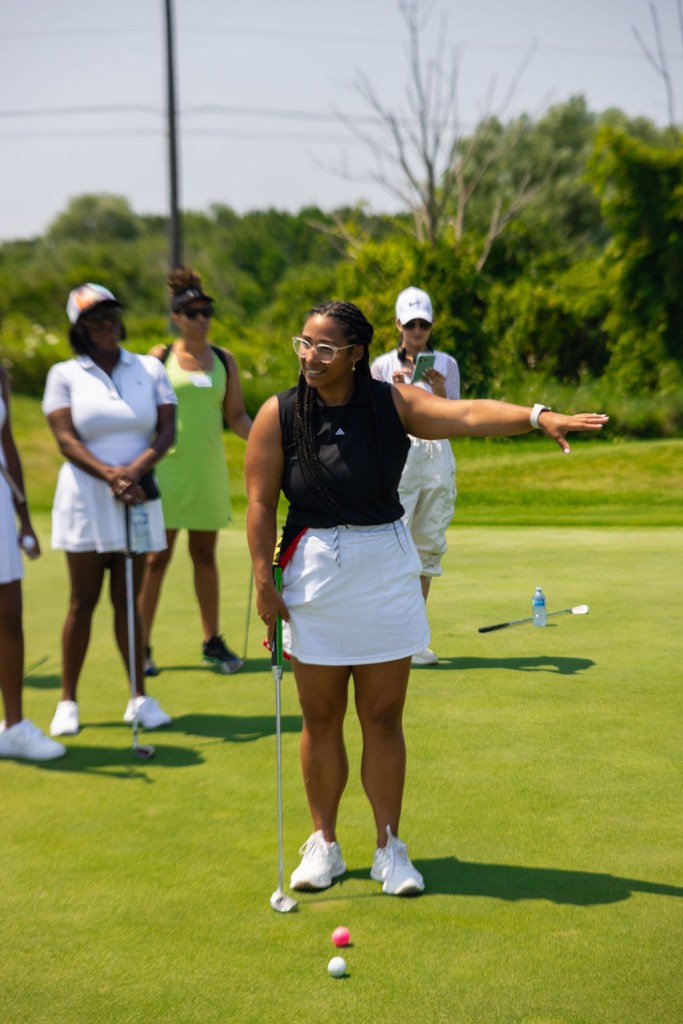
Tell me about the name Golf interrupted?
Sure. When I started playing golf again in Covid, I wanted an Instagram name that was separate from my personal Instagram because I did not want the two to intermingle. Intermingle and I saw what I wanted to do with the page as being an interruption to the status quo of what golf was, and that was very white, very not diverse, not having conversations about getting other people into the sport. There were names floating around in my friendship chat like golfing with Amaya but I thought that was too basic, so we are going to do GolfInterrupted.
What lessons would you say golf has taught you about yourself and life in general?
Golf teaches you so much about yourself because it is such a in your head, sport. Um, it teaches me that I am. Or it has taught me that I put a lot of pressure on myself. I expect perfection right away. I struggle when things are not perfect. Um, I have a hard time accepting, um, good shots as good shots. Like I do not celebrate the wins. Um, in my own personal golf game. It’s true in life as well. So, all of those things that are that I just mentioned are reflected in my personal life, too. It is easier for me to see it in golf, harder for me to see it when it’s happening in other areas of my life.
What does access, equity, representation look like to you in golf?
Yeah, it lofty, but it looks like me walking onto any golf course on any given day and seeing equal parts white men, white women as racialized men, racialized women, but specifically seeing black women as part of that racialized community on the golf course. There are other folks with other backgrounds that are accessing the sport in their numbers but we aren’t. That’s the baseline. I could go to levels like seeing, you know, black women introducing their girls to the sport, you know, so seeing younger black girls participating. If you go up from that, seeing black women participating more in competitive golf and then adding on to that, seeing more black women participating. Getting to the professional levels of the sport. I feel like there’s a ladder that I’d love to see us climb, but I’m at the baseline participation level where I want to see more numbers.
There are so many spaces that women of color and marginalized communities don’t have access to or you don’t see them represented. What words of encouragement would you give them?
You belong! Even though it may not seem like it right now and might not feel like it either, you truly belong. It’s challenging to have confidence when you feel isolated or like you’re one of the few in a space. It might sound insincere to suggest that you should stand confidently in the belief that you belong, even when it doesn’t feel that way. However, it’s important to ground yourself in the understanding that you do belong.
I almost want to say “fake it till you make it” and act as though you belong, because I realize that if I had shied away and returned to my car at that moment, I might not be on the journey I am on today. I had prior experience playing golf, which made it easier for me, but it’s important to recognize that even if you don’t feel like you belong in that space, you do.

You have been nominated for the Warren Crosbie Community Leader of the Year award. That is an incredible honor. Congratulations! How do you feel about this nomination?
It feels rewarding to have my work recognized. The PGA of Canada, or the Professional Golf Association of Canada, is the governing body for all golf professionals in the country. Golf professionals are individuals who work within the industry, while professional golfers are those who earn their living by playing the sport.
From the data provided by the PGA, I know that there are only two Black women in the PGA of Canada—myself and Chloe Wells, who also lives in Mississauga. This stark statistic highlights the challenges within the industry and underscores the importance of the work I am doing. Therefore, being recognized for my efforts feels incredibly gratifying.
This past year, I have put in a lot of hard work. People often take for granted the experience of being an immigrant in a new country, arriving without knowing anyone. Throughout my first year, I focused on building connections: identifying who the Black individuals in the space are, learning about various groups within the community, and understanding who the professionals and governing bodies are. I took the time to explore the local golf courses, discover who owns them, and find out who works there. My goal was to gain a comprehensive understanding of what golf and the golf business look like.
I spent the second year dipping my toe into what, interfering with that looks like. I’ve spent my third season making it explode. I feel like that growth and how much work I put in this year both just coming up with ideas, booking courses, finding people, promoting it, all while still navigating, being an immigrant and that experience and the newness of that and all the challenges you have in your personal life because of that, while also balancing a 9 to 5 with lots of expectations in that busy season as well, while also balancing my golf interrupted pieces content. It was a hard year. So, to feel like, hey, the governing body recognizes the work you’re doing is something good feels really special.

How do you deal with hearing, no?
As young people say, I just say “bet?!” What I know to be true to myself is I am an activator. I make things happen. If you tell me no, I am going to find somewhere else to do it. There’s not one golf course in this country. There’s not one sponsor in this country. There’s not one person in this country who could, like, shut a whole idea down. So, it’s just kind of bet. The people who say no are doing me a favour because you don’t see the importance of having participation of black women in this sport. You are not someone I want to work with, right?
What’s next for Amaya Athill?
2025 is going to be an amazing year. I am grounded in the fact that I have taken a leap from law to sports. I am getting more comfortable with that. I am not trying to get back into law right now. I don’t see that for myself.
You’re not getting back into law?
I don’t think so. I’m called to the bar here, but I have not ventured into getting back into the space. I think I have really found a love and a passion for what I’m doing. Growth in the sports space is something I’m still trying to figure out. I am trying to figure out what that could look like professionally for my 9 to 5.
2025 is looking really good in terms of the growth of black women golfers, the corporate support that we’re going to receive. The things we’re going to be able to roll out and do the way that I want to spoil all of our participants in some of these events that we’re hosting this year. I’m really excited because of the visibility of what we did. Black women golfers is going to it has so much more support than we’ve ever had, and we’re going to be in spaces that you wouldn’t expect. You should. You should expect, but you wouldn’t expect. I’m super excited.
In terms of my personal life, I wish I had more of an answer for that, actually. In 2025 I would like to have more work life balance but I don’t think that exists. Shonda Rhimes Year of Yes, where she talks about if I’m killing it in the In the industry. I’m not being a good parent if I’m killing it with my parenting. I’m not killing it at work. I don’t think we can have it all. I truly don’t.
You can have it all. Just not at the same time.
Not at the same time. Exactly. I think for me, this concept of finding balance just means ensuring that I’m giving the right amount of energy to the right things at the appropriate times.
Thank you so much for taking the time to speak with me today. I appreciate your time and have enjoyed hearing your story.
Thank you. Ann-Marie.
One response to “A Q&A conversation with Amaya Athill – Golf Pro and Founder of Black Women Golfers”
Amazing and inspirational young lady. Bravo!!!