

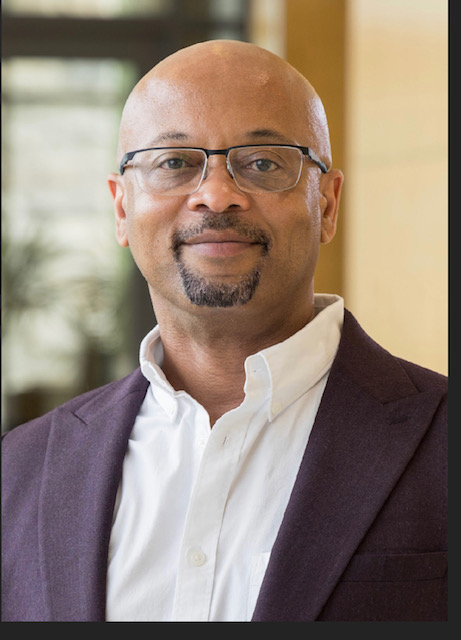
As a black veterinarian in my field, I’ve always had to take the scraps, the jobs that I could barely get. I never had options. I listened recently to Caroline Wanga, the CEO of Essence, and she said, ‘who you are is who you are, and if you can’t be who you are, where you are, then you need to change where you are.‘
Who is Troy Holder and what are you most passionate about?
I am a Caribbean man at heart. I have not lost that part of who I am. I am a mental health advocate. I’ve suffered from mental health issues my entire life. My father was bipolar, so I kind of grew up with that. In veterinary medicine, we have a big problem with one of the highest suicide rates. I’m a feminist. I was raised by some very strong Caribbean women. I’m a dad, which made a big difference in my life. When she was born in 2013, it changed my perspective on many things. There wasn’t a division between Troy Holder, the surgeon and Troy Holder, the man. I’ve always thought that being a surgeon was all I was good at and what I brought to the world, but after she was born, I definitely made the separation. That’s just what I do. That’s my profession. I love it. But I’m so much more than that. Just holding her for the first time, I made that shift of wanting to be the best possible individual and person, my best self. I want to be sure that when it’s done, she can say that her father was a decent human and loved her unconditionally.
I’m a veterinarian and one of two people of African descent board-certified in large animal surgery. Yeah, and that’s who I am in a nutshell. I’m most passionate about making a difference and putting good energy into the world. I believe in karma. I’ve been very fortunate. I did not see this life for myself and being successful and doing something I enjoy; the OR is my safe space. That is where I feel most at peace. This is a gift that has been given to me. I want to do whatever I can to help others achieve their goals and improve their lives. I have that duty because, as I said, this is more than I’ve ever expected. It’s about giving back.
I always envisioned you achieving great things, so hearing you say you had these doubts is surprising.
I didn’t expect to live this long, to be honest. So here I am.
I am happy that you are here! You touched on burnout as being commonplace in the profession. I read somewhere that veterinarians worldwide are suffering from burnout. Please share a little bit about that.
For whatever reason, very tightly wound, type A personalities are usually drawn to veterinary medicine. We are usually overachievers and perfectionists. It’s also hard to get into vet school. There are only about 30 veterinary schools in North America, much less than the number of medical schools. The veterinary program is also challenging. It requires a lot of recall and memory. Unfortunately, as a profession, we have not yet learned much about work-life balance. There are just not enough veterinarians, so the working hours are very long. As I always remind my students, veterinary medicine is a customer service business, and people are not always nice. Some of the behaviours that I have experienced and witnessed; they would not treat their MDs the same way. People will sometimes speak to you in a very degrading manner. Being berated and the long hours on call can all be challenging. Small animal medicine has caught up in the last few years, where they’ve gone to four-day weeks, for example.
Another issue is that many veterinary students graduate with over $200,000 in debt, and the salaries are not always fantastic. The starting salary for an equine vet could be anywhere from $60,000 to $75,000. So, between the stress of not feeling appreciated, the pressure of this mountain of debt and the long hours, it’s easy to burn out. We have made some strides in the last couple of years but still have a long way to go. It would be a step in the right direction to go to four-day weeks rather than expecting people to work day and night.
Unfortunately, we also have access to many drugs that can be used to commit suicide. I think those factors have made it really, really hard. It’s a big problem that we are aware of, and we’re trying to make a change. For me personally, I try to do four-day weeks when I’m running my service. I take Fridays as the down days. I meet with students and catch up on paperwork. I believe in modelling good behaviour. That’s important. I really try to emphasize wellness for my students, residents and interns. You know, if you have a doctor’s appointment, go. If you have a death in your family, stay home. I’ve witnessed other veterinarians or professors who are like, ‘You’re going to be here, and you’re going to do what you have to do regardless of what’s going on in your life.’ I don’t believe in that. I think we’re human beings and have multiple facets to our life. You must be compassionate and understand that life throws curves at all of us. We really have to promote work-life balance and pay people what they’re worth. I think when people are struggling financially, that can add another layer of stress.
This is very enlightening. I would not have thought about it in that way. Many people would assume that your job allows you to play with puppies all day or kiss horses and that it is a relaxed profession. It is definitely more stressful than we assume.
Yeah, for sure.
You mentioned that you are one of two board – certified large animal surgeons of African descent in North America. That’s big stuff! Can you share what made you decide to pursue a career in veterinary medicine?
My grandfather, who raised me, he was into horse racing. Before I could even spell my name, I knew how to place bets at the Garrison Savannah (in Barbados). Those were the happiest days of my childhood. Just going to the races, eating sugar cakes and snow cones, and watching the horses run. That became what I was most interested in as a sport, an extracurricular activity, you could call it. I really looked forward to going to the races. I went to school thinking I was not a good student. I wasn’t really very focused. I can be honest about that now. I only really blossomed once I went to vet school. When I was 19, I worked at Seawell Air Services at the airport, and I’d been doing that for about three years. I saw an advertisement in the newspaper announcing the University of the West Indies had recently started their veterinary program. I’m that type of person; it’s like I just see something, and I can make a snap decision. I said, you know what? I want to be a veterinarian. I told myself it would be fantastic if I could do something that I actually loved so much that it wouldn’t feel like work. I just made that decision one day, and the next day, I sent in my application and figured out what prerequisites I needed to go to vet school. That’s how it all started. I’ve never wavered one day from that. Vet school was difficult, but I always wanted to work with horses. That was the goal from the start.
It’s surprising to hear you say you were not a good student because I remember you as a great student. I remember us in biology class; you were the one dissecting the bird, and I was the one standing back, afraid to look and not wanting to be anywhere near it. Looking at it now, we were all struggling to find ourselves, so we didn’t realize that our friends were struggling as much as we were. What a pity we didn’t know, right?
Comes with maturity and experience and just growth.
Yeah, it does. It does. Let’s talk about veterinary medicine generally. Would you agree that in North America there is a need for greater diversity in veterinary medicine? If so, what steps do you think need to be taken to encourage more young people of colour to join the profession.
There are so many studies that show that having diversity in different organizations just strengthens it. We all have different roads we walk, and we all have something different to contribute. Unfortunately, veterinary medicine is just behind in a lot of ways. You know, 30 years ago, it was a male-dominated field. I had a female surgeon colleague in Oregon, and the stories that she would tell me of when she was in vet school, you know, of professors not wanting women in the class and deciding, okay, I’m going to give my lecture in the male bathroom so the women can’t hear, you know, and this is 30, 40 years ago that we’re talking about. Now, 75% of all classes are female, so we’ve made that growth. And the next step is diversity. It has to be very intentional at this point. When I was in Oregon, I purposely sat on the admissions committee for four years. I did it because I felt like I was now in a position to have a seat at the table. The class distribution changed, and Oregon State is now one of the most diverse schools in North America.
We come from the Caribbean, and I came to America feeling like I could be anything I wanted. We grew up in a country where people of colour are the majority, and I did not know racism as I was growing up. So, I had to learn the language and really what it was all about
One of the deciding factors that influenced me to come to Virginia was when I was interviewing. I had dinner with one of the third-year African American students, and halfway through dinner, for whatever reason, she became very emotional. I asked her, ‘Why are you crying?’ She said, “I have never seen anybody like me in a position like you, and I feel like I’m sitting with a celebrity.” That was one of the first times I’ve gone through something like that, where I realized just existing can make such a big difference.
We have a full-time DEI director at Virginia Tech. Having a DEI Director is necessary in every vet school. Oregon State doesn’t have one. The DEI Director at Virginia Tech is dynamic. They’ve been talking to me and some other leaders within the vet school about going to high schools and talking to underrepresented minority students to show them there are people like them in this profession. Virginia Tech has done an excellent job; its media department is solid. They did a story on me and got it out that I exist. Five people have approached me to mentor them, and they all say the same thing. We did not know someone like you existed. We must be very intentional if we’re going to make changes. As it is, many people don’t see it as a viable profession. We also have to let them know that a veterinary degree is about more than just dogs and cats.
You can do so many things with a veterinary degree. I think it is just getting that out there and letting people know that this is a wonderful profession with so many different paths you can take, especially in research. Many veterinarians work in human research, you know, developing devices, medications and methodologies that you use in human medicine. I think it’s about educating people, especially underrepresented minorities.
What does a regular day at the office look like for you?
Every day is so different. I arrive at about eight and leave when the work is done. I see patients on Mondays and Wednesdays and do surgeries on Tuesdays and Thursdays. Friday is a catch-up day, and, of course, emergencies happen. That’s the nature of things. An emergency can walk through the door any day, and you have to reshuffle your schedule and get it done. That’s what I love. I have no idea what my day will be, and that’s very exciting.
And then when you’re done, you’re like, you know what? I saved a few animals today and brought them back from the brink of death. That’s what I like most about it: making that difference. You know, I’ve had horses that belong to a child, or I’ve had people share with me that they were drug addicts, and this horse was like a therapy horse that saved their lives. There’s a story behind each case. People will share things with their veterinarian that you start to wonder, okay, am I really supposed to be listening to this? They open up a lot, and that’s the part I love about it: you can make a difference in people’s lives like that.
We also have on-clinic duty and off-clinic duty. So, being a clinical assistant professor, we have something called an FTE or the percentage of weeks we spend on the clinic floor. I teach on a clinic floor. It’s hard for people who don’t know the concept, but if you have ever watched Grey’s Anatomy, it’s like that. You have residents, interns, and students, and they learn as you go along with each case. They go to surgery with you, and they learn like that. We have rounds and discuss the cases and their treatment. I spend about 24 weeks of a year on clinic duty. I also have teaching responsibilities, which are in the classroom. I also have lab responsibilities. I go to a lot of meetings. I sit on committees, so it’s very multifaceted. I’ve done private practice and academia, but I really enjoy academia much more.
How do you deal with the emotions? I know is not every day is a successful day. How do you deal with those types of feelings?
A few things have helped me there. I always tell my students to remember that horses, well, any animal, are at the end of the day, property. And people have the right legally to do what they wish with their property. There are limitations of course, and it’s our duty if there’s abuse to step in and stop it, but we have to remember that people have a right to legally do as they wish with their animals. That has helped me. I can compartmentalize well also. I give my best but do not take my work home with me. I’m very realistic. You’re not going to save everything. It’s just the nature of life.
I am very empathetic. I’ve been in therapy since I was 17. I can get into those really difficult conversations and be very present, be there with them in those challenging moments and then go off to do something else and put it behind me. It’s not about being cold or indifferent, but I’ve just been able to dig so deep into my own past trauma and history, which has helped me a lot. My friends joke that I’m the one they come to for advice because I’ve been in therapy for so long – I still am. I do it because it helps me in my life and allows me to continue growing. It has also helped me a lot as a veterinarian. I get a lot of compliments from my clients about my ability to be present, communicate well and be very empathetic.
You’ve opened up about your mental health challenges and how therapy has helped you. With the increasing number of young people facing mental health struggles, it’s important to have nuanced and multifaceted discussions about mental health in our society. How would you encourage a young person who is hesitant to seek help due to concerns about how they may be perceived?
First of all, we have to break that stigma. If someone had cancer, would we be making fun of them? No. Would we tell them not to get treatment? We have people who live with diabetes, lupus, whatever, they’re not looked upon as flawed. They have a disease that has to be managed. I think as a society, we have to get to that point where we understand that some mental health challenges are because of chemical imbalances. I’ve acknowledged that is what I’m predisposed to, and I have to take the steps to handle it the best way I can. That’s the only way I’m going to live my best life and achieve my potential. That’s where we have to start. We have to take away the stigma. Nothing is wrong with you. It’s like any other illness and you are responsible for your well-being and seeking out help. Until we can collectively break that stigma, we are always going to have these problems.
Could you explain why authenticity and transparency are important to you? It’s clear that these values are an integral part of your ethos, and I would like to know more about why they hold such significance for you.
It was not always like that. It’s been a really long process of growth. The turning point for me is when I became a father. I really started to dig deep and stopped being ashamed of who I was and where I came from and start to process my trauma. We all have trauma and it’s about dealing with that. In time I started to realize that inauthenticity was my Achilles heel. I didn’t even understand that it was happening. I would deal with inauthentic people, and I would struggle. I would go home upset and depressed. I think that’s also a part of being a veterinarian, as an underrepresented minority. This biggest part I struggled with is code switching. I’m constantly trying to mould myself and make myself small to fit into these white spaces. Then I realized it was harming me. So now, I show up as my most authentic self and that has made such a big difference.
A year ago, I was going to walk away from veterinary medicine. I was tired of the racism and the bad treatment. Around that same time, I was sent by Oregon State to the AAVMC Leadership Academy, and we did a lot of exercises about management and looking into yourself to figure out the type of leader you were or wanted to be. That’s where the word authenticity kept coming up for me. As a black veterinarian in my field, I’ve always had to take the scraps, the jobs that I could barely get. I never had options. I listened recently to Caroline Wanga, the CEO of Essence, and she said, ‘who you are is who you are, and if you can’t be who you are, where you are, then you need to change where you are.’ That statement really spoke to me. I had put myself in so many spaces, that even before going in, I knew they were going to do me harm.
When I went began the process of looking for a new place of employment, or a new ‘where’, I purposely determined that I was going into every interview as my most authentic self. I made sure that I went into it as, this is who I am. I peeled back all the layers of the onion so to speak. In ever interview, we talked about my therapy, my goals, my life, what I want as a veterinarian, as a surgeon…. This was the first time in my career that I got multiple offers, and it showed me for the first time that people actually want authenticity.
That’s what my students want as well. I find that they respond well to me because I’m a flawed human being. We’re human and I share my mistakes and I think I get a little more out of them like that, a little more respect. In a sense we are equals. I teach students who are in their final year and when they finish their degree, they will be my colleague. Yes, there’s a hierarchy here. Yes, the buck stops with me, but I try to lead with authenticity because that’s what I want to be remembered for. We have a finite time on this earth, and I want people to remember that I was authentic.
Thank you for sharing that. It’s very important. In so many ways, it feels like we live in an age of make believe with the influence of social media but it’s important that we tell young people that you can be and should be your authentic self. Walk into the room fully possessed with all that you are and if in that room they don’t appreciate who you are, then you don’t need to be in that room because there will be a room where you are welcomed as your full self.
Exactly.
What advice would you give to young men or women interested in pursuing a career in veterinary medicine, especially if they were focusing on large animal surgery?
I would say spend time in the field, do externships, and volunteer. Look for a job. Many clinics hire vet assistants, where you may start out mucking stalls and restocking equipment and stuff, but that gives you a window into the veterinary world and what it takes. You’ll see the whole dynamic of the situation, so you don’t go into it blind. Do this before applying to vet school, or even if you’re in vet school, because you don’t have to declare what direction you’re going in until the third or fourth year. So, you will be able to see and talk to people, get mentors and fully understand the dynamic of that field. Each field of veterinary medicine is so different.
It’s very important to have mentors to guide you, bounce ideas off of, and then figure out: is this really for me? Do I really want to do this with my life? I have had so many colleagues who do not practice as surgeons anymore. After spending 4 or 5 years of their life specializing and studying for boards, they went into it and decided that the lifestyle was not for them. I say lifestyle because it is a lifestyle. Equine Practice is hard on your body.
If you could speak to your younger self, what would you say to young Troy Holder?
Wow! You’re going to be all right, and although you don’t know it now, your best quality is resilience. You are resilient, and every time you fall, and you will fall multiple times, you somehow will get up and fight. You have a lot of tenacity, and it will be all right. You are going to go through some really dark times where you really, honestly feel like you’re not going to get out of this with your life, but just keep hope. A lot of wonderful things are going to happen for you. Just keep that tenacity and resilience; it will be a fun ride.
What’s next for Troy Holder?
If my back survives, I want to practice on the clinic floor for at least eight more years. I am toying with the idea of an MBA, but I’m still not sure. I want to finish my career in an administrative role, be it a department head or an associate dean of students. I want to have a seat at that small table where I could shape some change and move veterinary medicine in a direction that especially helps underrepresented minorities. In the back of my mind, being a dean would be the fitting end to this whole thing. That’s a long shot, but yeah, that’s really where I see myself. I have realized in veterinary medicine that too many leaders are performative. They’re ticking the boxes, and the whole buzz is DEI, but it’s not authentic. I would like to get to a point in my career where I have access to those rooms, even if they don’t want me there, and use my voice to change perspectives. That’s how I would want to culminate my career.
I am confident that you will achieve everything you set out to do. Thank you for taking the time to speak with me and for being so open. It has been a pleasure. We have known each other for a long time, and seeing you become all you have been meant to be brings me so much joy. I have many fond memories of Troy – always laughing, always up to something silly (laughs). Witnessing all that you have accomplished is an absolute joy!
It’s been 40 years of friendship.
Yes. We have grown and come out on the other side and are all we are meant to be.
I feel exactly the same way. You are where I thought you would be as well.
Thank you for being with me today.