
VP National Partnerships, Outreach & Procurement of the Black Business and Professional Association (BBPA)
Community Servant and Advocate
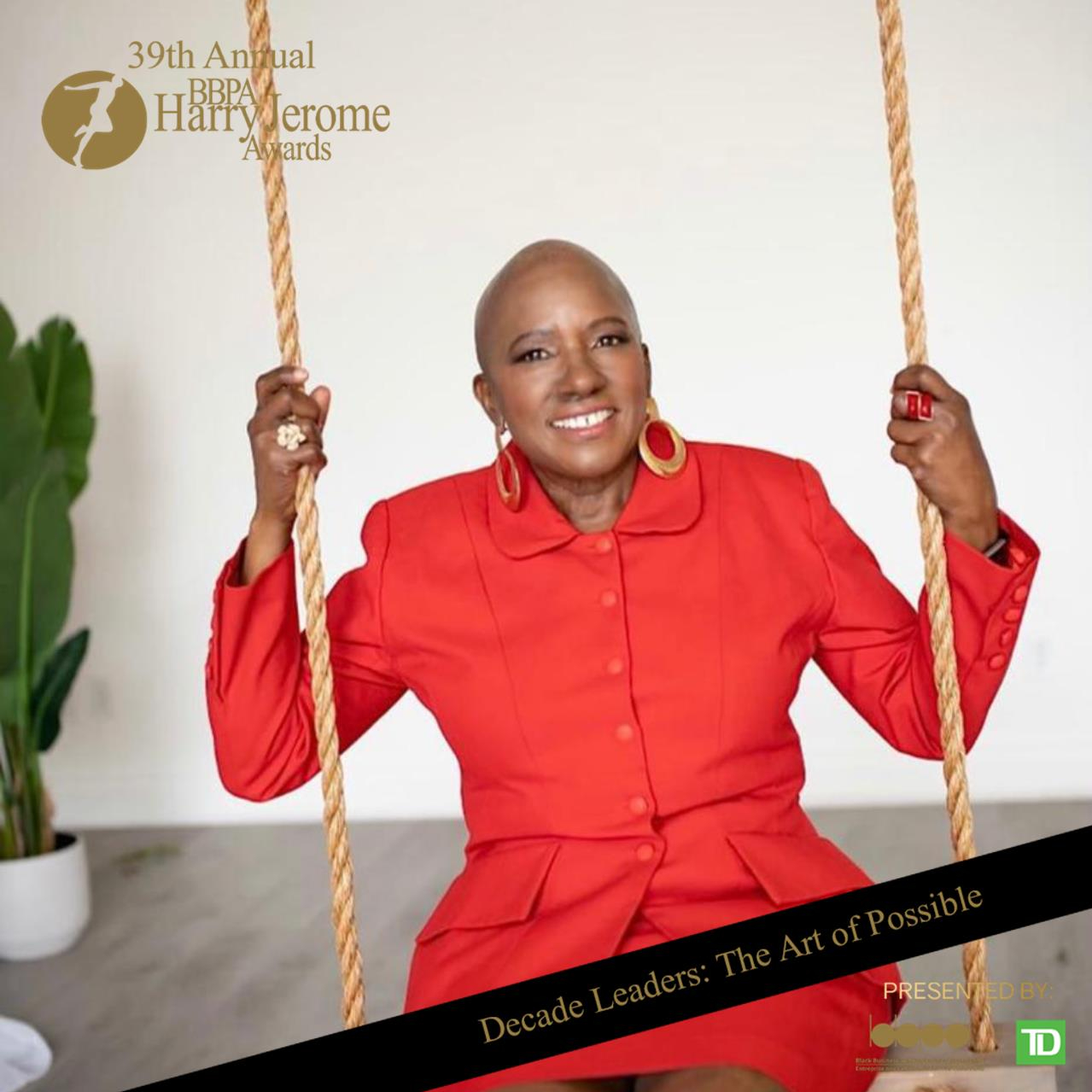
“Thoughts become things, choose good ones.“
Who is Frances Delsol and what are you most passionate about?
I would say, what I do reflects who I am. I spent 35 years at Bell Canada in a senior procurement role, and it allowed me to meet people and speak with people and end up with a win-win, which is what I like to do. I love to communicate. I left Bell Canada, and I am now at the BBPA, the Black Business and Professional Association, where I’m helping to build the Black entrepreneurial community and by extension, the Black Canadian community, and the Black global community. I love that because I like building community. I am also the Trade and Investment Commissioner for Dominica, so I promote my island home as well. Overall, I would say that I am just passionate about community, and my life and my actions reflect that.
You have spoken about building community. Can you share how you became involved in that work?
Activist is a big word. I would say I am a community servant. You know, Barack Obama referred to himself as a community servant even when he was President of the United States. For me, I think it started in my home because both of my parents were community servants. My dad was a Policeman and a Deputy Fire Chief. My mom was a school principal and a home economics teacher, strong proponent of education, reading, and understanding but she was so many other things. She was a local loans officer; she wrote wills; she was the local lawyer; she intervened when people had problems; she was a marriage counsellor; a dressmaker; she was everything. I saw through their efforts a building of community in the way they lived their lives. I remember when I was a child, kids would say to me, ‘oh, it was your father who went into a burning building and saved the children,’ and I was so proud! I didn’t really understand, but I was so proud that my dad had done something great. I would then say to people, ‘Oh, did you know that my father went into a burning building and saved children?’ When my mom made clothes and people could not pay for the clothes, they would bring a bag of food. When she would give people loans, there were times that some would come back, and say, I don’t have the money this week, but can I give you a bag of food. They likely couldn’t get loans at the bank because they couldn’t read or write. I was about nine years old, and I remember saying. “Oh, why don’t you take the money? These people just bring food, we have enough food.” We had bags and bags of ground provisions, so we really did not need more food. She would say “My child, I’m paying it forward.” You know, Oprah made that phrase big, but I was nine when my mom said she’s paying it forward and it was only as an adult I realized what that meant. Even as a young adult in Dominica, before I came to Canada, I joined a group called L’Echelle (ladder) that helped the adults learn to read and write. I was also very influenced by the likes of Rosie Douglas[i] and Bernard Wiltshire and those folks who studied abroad and came back with a different kind of consciousness about building community and making sure that we knew who we were and proud of our Blackness. So that is what I had in me, from parents to mentors like Rosie. I came to Canada with that state of activism or community, whatever you want to call it.
You have spoken about watching your parents be community servants and the positive impact that had on you. Can you share some of the struggles, that you have experienced as a community servant, or has it been smooth sailing for you?
No, no, it has not been smooth sailing. It hasn’t been smooth sailing. What I have found is that people who do not have a sense of community don’t understand why you would do this, so people doubt your intentions. People think you’re doing it because you get financial gain out of it, but what you get is a sense of making a difference. People always think there’s something in it for you and those people most often come from within your community. Most often they try to trip you, they try to do things that will inhibit your ability to get the work done. I have found most of the difficulty in community work comes from within the community itself; it’s people who do not understand what giving back means because they are incapable of giving back so, they get in your way. In the business of building the Black community at the BBPA, I would also say that our people sometimes lack the understanding that this is not easy work, and that we’re doing this for you. We may not be able to serve you today or tomorrow, but we are serving some and it is waiting your turn; understanding that we can’t serve the whole broad base of people with needs, but then they become the most vocal in criticizing and, you know, bad news gets around a lot faster than good news does. So, you hear those stories, and you wonder, why is that the case when we are making such a difference? To answer your question in a nutshell, the difficulty comes from within, and it comes from those who do not fully understand the work that is being done. But I’ll say you still go on. If you are a community advocate, a community servant, you just go on because you have to understand that this is part of the job.
Those are important points. I like that you used the word community servant because it emphasizes being of service to others. With that in mind, what advice would you give to persons who want to become community servants?
It is very rewarding, but it is not for the faint of heart, and it is not for those who can’t handle criticism. It is also emotionally, physically, and financially exhausting and you have to be prepared. You have to be prepared for those things. When I did community work at the CDOA (Commonwealth of Dominica Ontario Association), most times I had to use my own funds to supplement the work that we were doing, but people didn’t know that. That is when they question your integrity because they don’t understand how you could be doing big events. They don’t understand the impact that it has on you financially or physically or emotionally, because they think you must have a resource or something that you’re using. Most community servants give of themselves in every way possible way. So, to answer your question, it’s not for the faint of heart. If you can’t handle criticism and if you can’t deal with people not loving you some days, then it’s not for you.
How do you deal with that because criticism is hard, right? Even for people who have broad backs and strong shoulders, it can be very emotionally challenging. So how do you deal with it?
It’s important to have people that you can rely on that you can call. I’ll tell you. I relied very strongly on a close friend of mine, we’ve been friends since college, Justice Irving Andre, and I remember calling him and crying and he said ‘why are you so concerned about mediocrity? The people who are criticizing you, you know, that’s where they fall, in that bucket of mediocrity’ and he said, ‘Frances, mediocrity despises success, and you are doing great, so don’t pay any attention to mediocrity because you are on the right track.’ So, I would say to persons interested in this work, you need people to instil that kind of positivity inside of you and tell you that on a consistent basis. You also need to be a strong person, I mean, even if you are strong, you still need support from persons whom you trust. You also need to have a good network that you can share your concerns and struggles with and who in turn will encourage you to press on and not to give up because that’s not the solution; you want people who are of the same ilk that you can share ideas with.
Over the last few years the global community has experienced a lot; from the covid pandemic to George Floyd, to issues affecting specific communities. My question then is, how do you remain hopeful with all of the struggles, and the many needs that communities have. How do you remain hopeful and continue to press recognizing that there are times when the impact of what you’re doing may be small?
One of the things I grew up with in Dominica was the saying “you don’t know where you’re going if you don’t know where you’re from.” So, when I look at our history as Black people and what we’ve come through, the sea voyage and what happened to Blacks in America or the in the new world. I look at even our history in Canada and what the early generation of the Caribbean and West Indian people had to go through as domestics. I know for a fact it was teachers, it was doctors who came up here, who worked as porters and nannies and they endured, right? You cannot help but be optimistic about the future because the reason we can be here, or we can be, is because they were, right? So, we cannot say to those who came before, I am sorry, it’s time to give up. Then what did they fight for, what did they fight for? We have to keep going!
You know crises come frequently now, as the day turns to night, but we have to continue to build on the work of those who came before and just do the work with our heads down. Some days, yes, you just want to close your eyes and say, ‘I’ve had enough,’ but we can’t, because, if not us, whom? I know people are tired. People are tired of giving. People are tired of talking, so we as a Caribbean diaspora need to recognize that the survival of our island homes is very dependent on us, wherever we are in the world. We must be hopeful because we have to think of where we came from, and who came before us, and trust me, the struggles were a lot harder back then than what we’re facing today.
We hear a lot of negative things about young people, but we also see many of them being activists and community servants from a very young age. As a mother, what do you think we need to do to raise children in a way that makes them more empathetic and more social justice-minded leaders?
I think you lead by example. They must see you being, they must see you doing. From a very young age, I gave my daughter books that enriched and broadened her mind. I talked about what happened to Black people during the enslavement period, I talked about being Black in Canada. I made her aware very early on that as a Black child she might see things that don’t appear to be correct or that are just plain wrong. I wanted her to be conscious; what I didn’t want was for her to be surprised. We must lead by example, and we must teach them about our history because as Black people who have been unjustly treated so many times, we have to find similarities in the rest of the world. We have to tune in to what is happening. They must see us being concerned; we cannot be indifferent because they will grow up indifferent. What I have found is that the younger generation is not as tolerant of injustice as some in previous generations. They may be seeking to bring about change in a different way, but you know, when George Floyd was killed, my daughter told me that all her university friends called and said, ‘how were you feeling, how are you, we concerned about you.’ I don’t know if that had happened in the past decade, if my colleagues at Bell Canada would have called me to ask how I was doing. So, it reflects a change in the mindset of young people, but I still believe, especially for our Black kids, we must lead by example. We must show them that we are intolerant of injustice, that we will speak up when wrong is being done, regardless of who the victim is, whether it be the Asian community, the Indigenous community, the Black community, or the white community. We must address wrongs and they must see us as being vocal and not sweeping things under the rug.
I totally agree! I want to switch gears a little bit and talk about something a little more personal and that is your journey over the last year two years or so dealing with multiple myeloma. I have said to you many times that I have been in awe of how you navigated what had to have been a very scary experience, but you navigated it with purpose and positivity. I feel like that’s something that should be tapped into, if only we could bottle your optimism and positivity! So, I want to talk a little bit about that and how you dealt with it, but first, what is Multiple Myeloma?
You said it can only be diagnosed through a blood test but are there warning signs that people should be familiar with?
I didn’t have any warning signs, to be honest, I didn’t feel different. It was when my doctor said she saw a degradation in my blood. You know, that’s why its important to do our physical every year. In 2019 it was at 120, in 2020 it had gone down to 97 or 98. I said, oh, let’s not worry about it. My family has a history of blood disorders, my mom was a carrier, and my nephew has sickle cell. We’re all anaemic, we’ve got all kinds of blood disorders, it’s not a big deal. She said she didn’t like it and thank God. I have a young very astute doctor, she said, no, let’s do it again in a month. We did it again in a month and it had gone from 97 to 95 and she said I don’t like this; I’m going to send you to see a blood specialist. On reflection, I guess I did have signs, but I didn’t know they were signs. I have suffered from sciatica for years, so in late 2019, I had some pain in my hip and my knees. I went to the Emergency Room because it was very painful, I could barely walk, and I was told it was the early stages of osteoarthritis. I thought that was it, right? Only to find out it was the Myeloma starting to act up because Myeloma starts by affecting the bones. I started to get some small lesions on my leg, I didn’t know what they were. I thought it was it was just some irritation I was having but it was the bones that were weakening. Then my urine was extremely foamy, and I read up, you know, what we all do. I went on WebMD and did a search for foamy urine, and it said protein in your urine. I said, oh, I have a smoothie every day and I put excess protein mix in and I thought that must be why. If I had said to my doctor for the past six to eight months, my urine is very foamy maybe she might have clued in, but I didn’t, because I had diagnosed myself in that instance and I thought I knew what it was. Those are the two examples that I can give you that were signs, but I didn’t know that until after I found out more about Multiple Myeloma. It was diagnosed very early and for that, I’m very grateful, but I honestly didn’t feel anything and there weren’t signs except when I did my blood work.
So, how did you process the news of your diagnosis?
Well, extreme shock because it’s cancer. You think you’ll get a cold, you’ll break a leg, you’ll get a headache, but other people get cancer, not you, right? So, it’s cancer. It took a while for me to process. When they did the bone marrow extraction, they had to do it twice. I knew why they were doing it. They were trying to detect if there was cancer in my body and I went through it, as painful as it was, because I’m like, you guys will find out I don’t have cancer. That’s what I was thinking. When the doctor called me and asked me to come to his office at the end of August 2020, that was when I thought, oh, it might be serious, this might be for real, but I’m still going with this atmosphere of nonchalance and thinking it’s not going be anything serious. When he finally told me, I think my initial reaction was shock and I shouldn’t have been shocked because he called me to his office. They don’t call you if it’s good news but that was how much I was in La La land, I guess if you want to describe it that way. So, the initial impact was shock! Shock! Then it was how am I going to tell my daughter? How am I going to tell my family? Then, things moved along so fast. It was Thursday and the Doctor said he wanted to see me back on Tuesday for chemo. I didn’t know what chemo was. I was like, I haven’t even told my family yet.
So, I went in on Tuesday for chemotherapy and none of my family knew I was undergoing it. I was sitting there getting the chemo and I became very emotional because I remembered, that’s what my father did when he had colon cancer. We found out when the doctor called after he had gone for a few sessions, asking why nobody was accompanying him when he was too weak to travel alone. I remember asking the doctor what was happening, and the doctor said he was doing chemotherapy. I remember thinking how inconsiderate my father was for going through this and not telling us so we could be there to support him. I felt the same way when I sat in that chair for the first and I thought, no, I have to let them know. Once I let them know, I mean, they took it hard, but I said, I need you guys to be there with me, because in my mind, I didn’t invite this stranger into my space, and I was not going to let that stranger in. I wasn’t going to let the stranger stay very long. That was always my mindset. I wasn’t going to let it stay because I didn’t invite it in. You know, the doctor said, well, it can’t be cured, but I don’t even think I worried about that because if you think about can’t be cured, you’ll think oh no, it’s here to stay and in my mind, I didn’t invite it! So, that was how I sort of, you know, worked through the process.
I know obviously, treatment plans are different, but can you share a little bit about what the road to recovery was like.
When I went for my chemotherapy, I looked at the people in the room, you know, I saw bald heads. I saw lethargic people. I saw despondent people. I saw people crying. I was sort of saying like, no, no, no, don’t give up. You know, fortunately, for me chemotherapy for three and a half months, was not a difficult undertaking. Some days I had highs and some days I had lows. Some days I was tired, but I would say in general, I was on an even keel. Where I had problems during those three months of chemotherapy was with anxiety because now and then I would remember it is terminal. Every time I remembered, it isn’t curable, I had a high level of anxiety wondering if the treatment was going to work, but my doctor was so good. I had to go in every week. When I started my treatment, the bad protein in normal people is at 20 or less. Mine was at 1180. So, every visit my doctor would say the protein is going down. Today it’s at 900, today it’s at 700, and so on, I was seeing the changes every week and that helped to calm my anxiety. I was thinking, okay, the bad protein is going down. Pretty soon I’ll be at everybody’s normal protein levels. The treatment also included the extraction of stem cells from your body. The stem cell specialist put it like this, ‘we’re going to take out all the good stems, all the nice little ones, the baby stems, and in the process of doing that we might take one or two bad ones.’ She said, it’s like the weeds in the garden, you know, you’re going to pull out all the bad weeds, but sometimes one will stay in the ground, and it will still be there and that is what may cause the reoccurrence of the disease but we’re going to try to take all the bad ones out. because now we’ve taken all the good ones. We haven’t killed them. They’re good. We’re going to give you a heavy dose of chemo to kill all the bad ones and then begin the process of transplanting the baby ones into your body. We hope that the heavy dose of chemo will get rid of all those bad ones that have caused you to be sick.
When that process started from that heavy dose of chemo to the transplant itself was probably the worst experience of this whole cancer diagnosis because for about 15 days. I was lethargic. I couldn’t eat. I lost my sense of taste. Everything tasted like metal. I thought I would never eat bread again. All I wanted was just to drink liquids. Just give me something to drink I couldn’t taste. If you gave me water or you gave me juice, I couldn’t tell the difference, they encouraged me to drink protein enriched foods. All you wanted to drink was water and nobody could survive on water for that long. That part of it was the most unpleasant experience. My daughter was with me and thank God. The doctor said, ‘we need her to walk, to be constantly sitting up or walking.’ All you want to do is sleep. You just want to curl up and never wake up because you just felt so bad. I had to get up and she made sure that I did my 3000 steps every day. She was like, ‘no, we have to walk, we have to walk” and I’m like, I don’t want to walk. She made sure that I walked because lying down or being inactive is what would cause you to get an infection in your lungs and that would be the end of it all. So, that part of it was not a nice experience. At The Princess Margaret Cancer Centre, they tell you from day one through day 20 how you’re going to feel. They tell you the days that you’re going to have highs on the days you’re going to have lows. I mean, it was just so accurate to the nth degree. I couldn’t believe it. They said this is the pit, this is where you’re going to feel your worst and from now on, you’re going to feel the improvement so you had something to look forward to because you could see the end of the discomfort, nausea and lethargy coming. So once that was over and I started to get to feel better, I just made up my mind that I was going to do what was necessary to remain healthy.
Given your experiences, are there any words of encouragement or coping strategies that you could share that might be helpful to other people who are going through a similar experience?
Yeah. As I said, being told you have cancer is a shock to your system. I think a lot of people remain in that state of shock and they just go through the motions. I saw it at the cancer hospital. They just go through the motions. They are still in a state of shock feeling sorry for themselves. I never asked why me because when I got all the blessings, I didn’t ask why me, right? So, I never asked why me. I used to say to them, fight! fight! This isn’t the end. I mean, even with me knowing that it could come back, I fight. Like I said earlier, I didn’t invite you into my home. it doesn’t discriminate anybody can get it. You must fight with all you have till the end and the only time the fight is over is when you decide the fight is over and you decide, you can’t do this anymore, but you have to be positive about the future. You must be positive about life. You have to want to live. You have to be excited about tomorrow. That is my advice to anybody going through it. Just fight, be positive, and find the good things. I also tell people, to surround themselves with positivity, because what you don’t want is people saying, oh, I’m so sorry for you that’s the worst thing you can do. Even when I started telling people, some people started crying and I’m like, I’m the one going through the process. I don’t want you to feel bad, but think about the person on the receiving end, right? I’m telling you and you start crying, what am I supposed to do, console you? I need you to tell me to fight! The community outside of the patient must also understand that they need you to be supportive and not bring any negativity into that space.
What are the next steps in the recovery process? Is it right to say you’re in remission or you are recovered? What does a treatment plan look like?
So once a month, I see a stem cell transplant specialist. This week was my one-month visit. We have changed it to three months because things are looking good, and my doctor doesn’t see any reason why we should see each other once a month. I also see my oncologist monthly. He hasn’t told me yet if the schedule is going to change. I will be on medication for the rest of my life. The cancer is in complete remission now but as I said earlier, it is incurable cancer. It can come back or may never come back but that’s why we do the blood tests every month to make sure that the protein and myeloma levels are low. The doctors also ask you to make sure that you keep your weight down, eat healthy so that you don’t get diseases like diabetes and high blood pressure. They ask you to remain calm and control your anxiety so you don’t have high blood pressure because all those things complicate your immune system, and you don’t want anything that can further compromise your immune system, but you are on medication for life and the medication is not inexpensive.
Do you have moments of fear about it?
Yes. Yes. I’d be dishonest if I said no. Yes, because again, we go back to it is not curable. When thoughts come, I tend to let them go because that’s what weighs you down. Sometimes I’ll think about it and say, I wonder if I will see my daughter turn 50. Sometimes I go online, and start reading, how long can you live with myeloma? Every day, the news is more interesting because they are coming out with new medications that can help extend a patient’s lifespan. So yes, there are moments of fear, moments of doubt, but most times I tend to not allow that into my psyche for too long and just enjoy the day and enjoy the moment and look forward to tomorrow.
I’m listening to you and I’m in awe because you make it sound easy. Am I right in assuming that your positivity is perhaps anchored in faith and that it’s something you rely on to help you move through the more challenging moments?
Oh, without a doubt. Without a doubt. When I’m working from home, especially during COVID, I have praise and worship music in the background constantly because that’s calming. That’s refreshing, and it’s calming. When I go to bed, I go to bed just listening to Wayne Dyer or any inspirational music and I just have it on. Sometimes I wake up in the night and it’s still going. I fall asleep to it. So that’s what I go to bed with, and I wake up in the morning with meditation because those things are important. After all, if you don’t anchor yourself with a sense of, where do I belong, who am I? You will just wake up all wound up. You can’t turn on CNN at 6:00 in the morning because that is not the way you want to start your day. You wake up in the morning with a meditation that welcomes the day, and like I said, I listen to a lot of praise music because I just find it very, relaxing, refreshing, and inspiring.
Do you have a favorite quote or affirmation?
Oh yes, and it’s on every email I send out. It is, “thoughts become things, choose good ones.” Years ago, I got introduced to the universe of things and I am a strong believer that the universe gives you what you ask for. That is why I tend not to allow myself to go into the negative space, because if thoughts become things if I tell myself thoughts become things, and I’m constantly thinking negative thoughts, they will become things because that’s what you’re asking the universe for. So anytime I get into that negative space, I remind myself to focus on positive thoughts. It doesn’t matter how bad it is, you try to flip it into a positive. That’s my favorite saying.
You are a woman who wears many hats; what does success look like for you?
Making a difference, making a difference in someone’s life, that when you are gone, they will say: she made a difference in someone’s life. She changed the world no matter how small or how big. She made a difference in the lives of others. That to me is success, that somebody would say that about me; that I made a positive difference in the lives of others. Nothing else matters other than you’ve made a difference for your community, society, and the world in general.
I want to go back a bit; you spoke in the beginning about your work at the BBPA. Can you tell us a little bit more about that work and why you feel it is so important?
The BBPA like I may have said, is the largest Black advocacy organization in Canada. After the Aboriginal, the indigenous community, we are the ones most under-served. We are the ones most negatively impacted by societal norms, people, and mindsets that are ingrained in society. I experienced it first-hand during my 35 years at Bell Canada, I can speak more openly about it now, you know, there was no diversity and inclusion. Some people were openly racist but I, as a Black woman, especially a single parent, had to endure it, because I had a good job, and I didn’t want to lose it to those who had power and authority. I couldn’t make decisions and I had nowhere to turn, regarding micro and macro aggressions; I wasn’t sure that anybody would listen or would even understand because they were of the same ilk. How would they understand that the statement, a microaggression, would hurt me if they are of the same ilk and they have no understanding of how bad this is. I came into the BBPA with that mindset knowing that is what all Black entrepreneurs have to face when they try to deal with the world out there. We can’t insulate our community; we can just help each other. We need the broader Canadian community to make us a better community, a stronger Black community and by extension, we will make Canada better. We must recognize all those defaults, for lack of a better word, in the system. We’re trying at the BBPA to fix it by empowering Black entrepreneurs. That work is very important.
One of the many hats you wear is that of a female leader. I have been reading a lot about the importance of diversity and inclusion, which you just mentioned, and a recurring point in the literature is that it is important for women in leadership roles to show up and speak up in a way that empowers others. With this in mind, how do you show up in a way that makes it easier for other people, especially young women, to feel empowered to bring their authentic selves to the table?
Well, it’s about treating people fairly. It’s about giving people the ability to express themselves. I have a young lady, a receptionist at the BBPA and she said to me a couple of weeks ago, “Can I tell you something?” I said, Of course, and she goes, “You’re very stern, direct and you say what’s on your mind, yet you are so kind.” I wasn’t sure at first where she was going with it, but she ended it by saying, you’re so kind. I explained to her that’s because I have expectations of her. I think when you let people know that they have capacity and ability, and you give them the authority to do it, you empower them, then they see in you somebody that they would like to become. There was another young lady who called us because she was having difficulty at her workplace as she was told that her tone and speech were aggressive and so I said to her, “I can relate to what you were told. I worked at Bell Canada and very often when I was being assertive, it was misinterpreted as being aggressive,” but I said to her, if you wish, I can help you through a couple of those processes, so you know what to say. Sometimes it’s not in the tone, it’s in the words that we use.
I think we can empower each other by just having our daily conversations or telling our employees that they have a right to be where they are, and they can be more than where they are. Again, I go back to us as Black people who don’t hold positions of power. We can’t practice discrimination regardless of what people think. You can only discriminate when you are in a position of power, and we are not yet in positions of power to discriminate. We have never been, and we still are not. We also have to give them the authority, now that there is an awareness amongst organizations that you don’t have to tolerate things like I did, but there is a way you address it, the way you speak about it is an education process. So, you don’t say, I don’t like this, right? You sit and you say, here’s what you said and how I interpreted what you said. Is that what you meant to say to me? That forces the other person to explain themselves and become aware if they weren’t aware. The other thing, too, is as Black people, we need to be present. We cannot say we were not included if we never show up. We need to show up every time we are invited to the table and sometimes show up when we’re not invited to the table and say, you know, I assume you forgot to invite me, but here I am. We don’t have to be bold and aggressive in the process, we can be there, and our presence speaks volumes because we’re still not able to get through many doors. So, the ones that open for us, let us not waste that opportunity.
My final question is what’s next for Frances Delsol?
She’s not going into politics. Let’s just establish that she’s not going to be a politician. I think honestly, I just want to fully retire and go and sit under a coconut tree in Dominica and drink coconut water, that’s really what I want to do!
Okay. That’s the goal, but I think you have a lot of work left to do, so what else?
I think building the Black community is important. There is still a lot to be done. Without going into too much detail, there’s so much that we still need to do as a Black community in building Black entrepreneurship, in getting Black entrepreneurs to understand how to navigate that space and getting the corporations to see us, to hear us, to believe in us, because there is the notion that we can’t do quality work. For example, we have a program at BBPA, which we call BAIDS. What that program does is use suitably qualified service providers from within our community. We are showing that we have great accountants, we have great lawyers, we have great marketers, we have great event planners and operations management professionals and more. We have great service providers in every capacity, but they have not been given an opportunity. That’s why a lot of Black people go into entrepreneurship and work for themselves because they can do good work, but nobody’s hiring them so they have no option but to get into a business for themselves and then reach out to the Black community for support, but you can’t survive just on our community. You have to be able to let the rest of the world know that you are there and let them know that we have quality outputs in our community. You just have to give us that opportunity!
I think the BBPA is opening the doors and we continue to do a lot more than that. We are making sure to address one of the areas previously neglected, that is with the financial institutions, not giving them the loans, not giving them what they duly entitled to. We are bringing visibility to that issue. You will notice that all the financial institutions are now offering Black entrepreneurial loans. That wasn’t the case five years ago, so that awareness is growing. Previously, we would walk into financial institutions, and they would just see a Black person and they would tell you No. Even now, I’ll tell you something, even now, we write cheques; we are the Black Business and Professional Association and sometimes people will call us and say that the banks put a hold on the cheque, for no other reason than our organization starts with ‘Black.’ So, there is still much work to be done.
I did say that was a final question, but that is my final question. You mentioned that other members of the business community don’t necessarily believe in our ability to excel, and a thought popped into my mind; do we as a Black community believe sufficiently in ourselves? How do we support and recognize that by supporting Black businesses we are empowering our community?
We need to do that because that’s where it starts, right? We need to have a consciousness, that level of consciousness that if we don’t support our own, who will? I know there are times when the Black businesses are starting out their costs are higher. This is because the turnaround may not be as quick as other companies or they have to spend more on the wholesale market; there are several reasons why the prices are higher, but we have to have that level of consciousness that I’m paying $0.25 more at this place because of those issues. That’s where the education process comes in for us as Black consumers, we need to understand why it is that we’re paying more. It’s not because Black entrepreneurs are greedy, it’s about supply and demand and we have to understand that they are smaller businesses and therefore they will have a higher overhead, among other things.
At the BBPA, we are trying to bring that into the education process. We are sharing positive stories about our businesses so that people become conscious. I think that level of consciousness about supporting your own in the Black community is a lot bigger today than it ever was. As I said earlier, we can’t discriminate we don’t know how to do that. We have been taught to support everybody. This is ingrained in us from colonialism. We’ve been taught to frown on our own. We’ve been taught to tell on each other when we were trying to escape enslavement. I think that mindset is changing, and we are becoming more aware of the fact that if we as a community don’t support Black businesses and Black entrepreneurs they won’t survive. Yes, there is work to be done but we are getting there, and the level of consciousness is growing.
I think that’s a positive note on which to end our conversation. I have enjoyed our conversation and I have learned so much from speaking with you today. Thank you for taking some time to speak with me.
You are welcome.
2 responses to “A Q&A Conversation with Frances Delsol”
Excellent interview. Honest answers
,best o0f luck Frances
Thank you for sharing a part of your lifes journey with us. You truly are a beauiful soul inside and out… bald head and all… keep shining.