
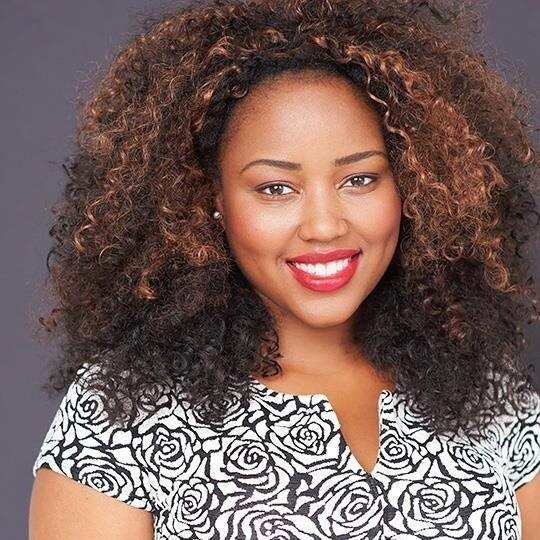
“At the core I’m an advocate; and that’s very much in alignment with who I am today. I’ve always been an advocate.”
Who is Lavinia Latham and what are you most passionate about?
This is such a great question. First, thank you so much for having me on your blog. It’s an absolute honour and a pleasure.
At the core, I’m an advocate; and that’s very much in alignment with who I am today. I’ve always been an advocate. From as young as four or five, I can remember always being very much not just triggered but pulled towards creating change as it related to things that I felt were unfair. So, my favourite thing to say was “that’s not fair and it shouldn’t be that way,” and I would just go on and on and on about trying to find a solution, which today has brought me along the journey of being a human rights lawyer. So, I’m a human rights lawyer and an advocate. I did litigation for a bit in the criminal court system, a little bit of estate law as well, and I found out that I didn’t really enjoy dealing with dead people, I like people alive so that was a very short journey. Then finally I settled into human rights, specifically anti-black racism.
That’s great! So even as a young child, you had this inclination to social justice. Did your family support that part of your personality?
Yes, absolutely. They loved to make jokes and say, you know, you should be a lawyer. You talk so much. You need to be a lawyer. My family nurtured my passion and I think that the jokes really helped in some way and being a lawyer became a part of the very essence of who I am. I’m very passionate about things needing to be the way they should be as it relates to people being treated fairly. I don’t agree with the current societal infrastructure and the status quo. For example, the closer you are to being a male, a cisgender white male to be exact, is the more successful you might be and every other identity is considered inferior.
Tell me a bit more about this journey towards the legal profession. What was the journey like?
The journey was very difficult. I like to be positive and keep things in a positive stream, but we don’t want to be unrealistic either. There were a lot of challenges, even just applying to law school. I remember not knowing how to apply, much less get in. I just knew you needed good grades. To me that made sense. I did a criminology degree at Carleton University, and I remember connecting with my good friend Danardo Jones who is also a lawyer and now a professor at Windsor Law. I remember the two of us trying to figure out the law school application process.
Thank God Carleton University is one of those universities that’s very progressive and supportive of all students regardless of the prevailing status quo. We were able to connect with other students who were trying to get into law school and we all formed a study group around strategizing the application process. In the end, we all got in, thank God, God is so good.
I like to jokingly say – but there is an element of truth to it – that being in law school was like education on crack; it was just so incomprehensibly busy, competitive, and challenging at the exact same time. In university, I exerted minimal efforts and I got good grades but in law school, everybody is intelligent, everybody is highly analytical, and all of my classmates were perfectionists. So, not only are you competing against people who are amazing academically, but the grading structure is also on a curve. So if one person gets the A, that means you’re not getting an A. There’s only a certain number of A’s that can go around, then there’s a larger number of B’s and, even more C’s. It’s purposefully set up in a very competitive way which now makes sense to me. For example, if you’re presenting a strategic interpretation of the law in Court, obviously there can only be one outcome if two parties are arguing. So, I get it, but it was very stressful.
I am also the first lawyer in my family. My family migrated to Canada from St. Vincent and even though they did very well for themselves, I was competing against people who have long generations of lawyers in their family. Entering that and then also being confronted with that old white money and that kind of competition and competitive edge. As a first generation Canadian, it was tough and it was very challenging.
Then there’s the challenge of getting and completing your articles. I remember walking into the court as an articling student, and despite being suited up, the Justice of the Peace telling me to “get back behind the bar, only lawyers and articling students are supposed to stand in front of the bar.” It was very disheartening and incredibly challenging to experience at such a young age in my life.
They didn’t know that you were a lawyer at that point?
I was a student lawyer at the point when that happened to me, and they didn’t recognize it. All the other student lawyers, some were Asian, some were White, they were able to sit at the front fine, no problem, but I guess in that particular Justice of the Peace’s eyes I was too black to be a student lawyer as well. He just assumed that despite my beautiful suit and my rolling briefcase, I must be the accused, which just further highlights the inherent barriers and challenges for Black lawyers.
When I would bring back these stories back to my predominantly White law firm, the response was often “well, your argument probably wasn’t strong enough” or “maybe you weren’t confident” or maybe this, maybe that, and I was like, “No. It was racism. Let’s call it what it is.” There was a lot of that, and it was a triple threat of oppression in the sense that I am Black, I am young and I am a woman. Looking back, it’s truly profound how many highly educated and accomplished legal professionals attempted to break me down during those early stages of my legal journey. So much of that journey was about just pushing forward no matter what.
So, that’s a question I was going to ask you, how did you overcome that? How did you remain positive and continue to push through when you had all of those barriers in front of you?
I think for me it’s because my foundation is so strong. In my family education is supreme. For my parents, it was always about, “you’re going to be a lawyer, this is who you are.” My grandparents and aunts also instilled the same values in me from an early age. It truly does take a village to raise a child and I am a testament of that.
My entire family stood by me no matter what. I might not have been able to enjoy support from many of the white lawyers at my old firm like the non-Black articling students, but I was able to turn to my family. The other thing that really helped me is the fact that my husband; he’s a lawyer too. We met in law school. My brother-in-law, whom I also met in law school, is also a lawyer; so we were all becoming lawyers at the same time. We had each other to really share those experiences with and to strengthen each other moving forward. I leaned on my husband and my brother-in-law a lot as sounding boards to ask questions like, “Am I tripping? Am I being crazy here? Don’t you think this is kind of weird? Is it just me or is it something else?”. Often times as Black people, the first place we lay blame is ourselves. Sometimes that’s a good thing to do if you’re trying to move forward because you need to look within before you look outside, but a lot of the times it is something more sinister than just “you are underperforming.” There is always greater systemic discrimination, oppression and barriers happening. Rooting yourself in those people who understand it and want the best for you is very important. I think I really took that and ran with it and I am who I am today because of that.
From the vantage point you now have, do you think that new lawyers of colour are facing similar challenges or has progress been made in removing some of those barriers?
I know many Black lawyers from my year and many others as well, have really worked hard to mentor anyone who has a true passion and willingness to do the work to excel as a lawyer. In that vein, I think it’s better. I will mentor anyone and oftentimes my mentees are other young black women or young black men. My husband does the same. It’s kind of like passing the torch and not in this new way where you charge to be a mentor but more so in a brotherhood/sisterhood type of way.
Oh, really? I didn’t know that there is sometimes a charge for mentorship.
Yes, oftentimes a mentorship relationship can cost between $3000 to $5000. People make business models out of this. This is very common in the United States. Canadians are a bit more conservative than our American counterparts but it still happens.
Going back to your question though, If we look at the root of the legal profession, when it first emerged, it was a brotherhood, a white brotherhood, and there wasn’t even a formal learning aspect to it. It was all about completing your practicum and learning how to be a lawyer through the actual practice of law. It’s only in modern times that we’ve added this formal learning aspect to it of three years and things have shifted and changed as the profession will shift and change. If we look at those initial principles and say okay, well, it was a brotherhood for white male, why can’t we make it a sisterhood for black females? And we’ve got that. We’ve got the Black Female Lawyers Network where all of us, black female lawyers in Canada, we share opportunities and resources with each other. Maybe there’s somebody who’s looking for a lawyer, maybe there’s somebody who’s looking for a student, any of those opportunities we share it with each other. So in that sense, I think it’s really good. We’re tight knit because there’s not a lot of us and I think that’s a beautiful thing.
I am going to play devil’s advocate here. What would you say to someone who argues that in effect this black sisterhood is exclusive and exclusionary and no different to what you say your white male colleagues do?
I love that. I would say that this is what equity demands. For so long, we’ve been in a state of disenfranchisement where people are being barred access to opportunities. We know that white people are more privileged just by nature of being white, number one. Then, as a group, they’re able to really lean on each other in ways that other non-white individuals cannot do in this Eurocentric society. By having these groups of individuals who have shared lived experience and, shared inherent characteristics, it kind of levels the playing field.
Sometimes, equity doesn’t look fair. Equity is not equality. Equality is we’re all the same and so we should be treated all the same. Equity is understanding that the Eurocentric power structures have been unbalanced for so long that the only way to rebalance things is to do something to level the scales. While it may feel inequitable that there’s this black female lawyers’ network that’s a resource for black female lawyers, that is what is necessary given the fact that for so long, black female lawyers weren’t even in the profession, much less able to collaborate and really connect with one another. So that’s what I would argue for.
What advice would you give to anyone who is interested in entering the field of human rights law?
I would say lean into what you’re passionate about. One of my mentors said it best, “what you want to do is find something that you love.” If you find something you love, you’ll never work a day in your life, and it’s absolutely true. Prior to being paid to be a human rights lawyer – in law school and even before law school – I was always involved in something to do with Black people. In undergrad it was the Caribbean Students Association, in law school I was National President of the Black Law Students Association of Canada. So, really leaning into those things that you do as a hobby or for fun, I think will really help to identify where it is that you want to go and then not really leaning into the more traditional pathways. So, there are three traditional ways to enter Bay Street or government or working for the courts and the tribunal system, but recognizing that human rights law is a little bit more social than that. It’s a very creative type of journey, so to speak, no two people have the same journey in human rights law. It really is who you know and forging those networks. I kind of fell into human rights law. It was actually not my intention. My intention was to remain in criminal law and because of the work I was doing at Black Law Students Association of Canada, when an opportunity arose to work at the African Canadian Legal Clinic, I was a shoe in for it.
I think it’s also about not being afraid to take that step. I read recently that women tend to underestimate the value that they bring to the table. We won’t apply for a job unless we meet every qualification that is listed and perhaps we would be more successful if we didn’t discount ourselves so quickly.
Yes, absolutely. I feel as women we are all guilty of that. I can’t tell you the number of times I almost made the same mistake of thinking if I did not fit every single requirement then I probably should not apply and then I told myself no, let them (the company) be the one to tell me no. You miss 100% of the shots you don’t take so you just have to be ready. I do think though that more people are doing that and the internet has been a beautiful thing for seeing each other’s journeys and sharing stories and experiences. Youtube is another great place for that and blogs just like your own. So, I love that. I think it’s easier now because of the internet to see people who are on a similar journey to your own. I remember being 14 or perhaps I was younger and of course there was no internet then and wanting to meet a lawyer, preferably one who looks like me doing the work so that I can shadow or volunteer to gain experience.
It brings to mind the quote that says, “you can’t be what you don’t see.” Its really important for us to see other people who look like us, doing certain things. It helps us to aspire.
It’s nice to see the Giants who’ve already done it. This Saturday, I had the opportunity to see the screening of the documentary of the life of the Hon. Jean Augustine. It was just absolutely incredible to see with my own two eyes, a Caribbean woman born and raised in Grenada come to Canada and start off serving a white family and then go on to become the first black Member of the Parliament.
She is still going. I saw her the other day and she looks amazing and is still as sharp and as formidable as ever. She is amazing.
Phenomenal. A living legend, literally.
I want to return to something that you mentioned before and that is mentorship. How important do you think mentorship is?
Oh, I think mentorship is absolutely integral. Without mentorship, we’re just spinning our wheels. You can already be great but if you have mentorship, there are certain formulas of success, (e.g. plug, play, rinse, repeat, type of thing) and if you don’t have access to someone who has that experience to tell you how to plug, play, rinse and repeat, then you’re essentially reinventing the wheel and we don’t need to do that. So, I think mentorship, preferably, if you could get it for free, would be awesome but even if it’s not possible to get it for free, I think it’s so integral that it’s worth it to invest in mentorship because it really does make a huge, huge difference. I’ve been blessed with many mentors along the way. I mentioned a couple of them Danardo Jones, Arlene Huggins, Edward H. Royle, Eb Reinbergs… The thing about mentorship is it doesn’t have to be someone in your direct network as those individuals are to me, but it could be also somebody who is far away. You can read about them, (for example Michelle Obama), I would consider her to be a mentor. I look at her professional path and her journey and where she is today, and I’ve never spoken to her, I would love to, but you pull the lessons that she shares and you apply it to your own situation. Rihanna, Beyonce, Oprah these are all mentors in my life that I study and learn from and apply. If you follow different stories, I’ve noticed that there is a formula regardless of the profession, there’s a formula that just works. Without that mentorship, it just takes a lot longer.
I read an article recently in the Harvard Business Review, which says it’s not enough for women to simply have a seat at the table. It suggests that women need to feel empowered to participate, they have to feel that their opinions count and that they are being heard and taken seriously. So with that in mind, what are some of the policies and practices that you think may be useful to encourage companies to make diversity and inclusion a priority, and how do we create a culture belonging in the workplace?
I think that we need strategy. A strategy that’s written, that’s documented. For example, I know Ontario has an Education Equity Action Plan. That’s something that can help inform educators, perhaps creating a board wide one. I work for Toronto Catholic District School Board, so we’ve got one that we’re currently remodelling for the next couple of years. Another thing that I think really helps is that the Ontario Human Rights Commission is always putting out policies, best practices, guidelines on anything, pretty much everything as it relates to human rights, and I think that’s a wonderful place to start for every company.
Companies need an equity and inclusion policy and practice guidelines, something that you can really point towards when things go awry. Companies should also make sure it’s in writing and that it’s gone through different checks and balances to make sure that it’s a legitimate document and it’s rooted in the law. The other piece that I think is really important is making sure that whatever language is in that policy and practice is also in the language of the actual legislation. So, the Ontario Human Rights Code has various enumerated grounds which lay out the codified protections based on various inherent characteristics and that list is always growing because equity is always changing. The last time I checked, there wasn’t a ground that protects, for example, weight discrimination. It’s been found that people who are obese experience discrimination in comparison to those who are slimmer and that’s something that some lawyers are arguing should be included within the Ontario Human Rights Code. So, keeping up to date with those things and then including them in whatever the company’s policy and practices are, I think can really make sure that your workplace is growing and evolving along with the law as opposed to waiting for things to happen.
I also really like these roles. So, the role that I’m in, I’m responsible for equitable policy-making, and proactive human rights. So being a part of the policies, procedures, also training when things go awry is really doing everything you can before it hits litigation. Every company that’s trying to affect equity needs those diversity officer type roles because it kind of gives a little bit more balance to the power structure. Oftentimes when people are marginalized and oppressed within white institutions, their voices are shut down and they don’t feel like they can navigate the system. First of all, they don’t even know how and secondly, they’re feeling vulnerable. They’re not trying to put themselves out there even more than they already have and have gotten or suffering consequences because of it so these roles (like a diversity officer or human rights and equity advisor creating policies – even just being present- I think really makes a difference in terms of equalizing the power structures. I’ve even heard members of the white community say, well, don’t you think it’s a little unfair that this person is bringing an issue forward and they’ve got this advocate who is being paid by this company and they’re coming in together as if that person’s right? My response is “what’s equitable doesn’t necessarily look fair or equal; hence why its equitable”.
There’s a nice example which I’ve seen kicking around the internet where you’ve got four people trying to bike ride and somebody gives all four people the same bicycle. The bicycle might work for the person who’s able bodied and the right height for the bike; but it doesn’t work for the person who is disabled and needs a special bike. It doesn’t work for the super tall person. It doesn’t work for the super short person. It doesn’t work for the person who might have one leg. So you need a modification to make it better or make it equitable for everyone and I think that’s a really wonderful example of the need for equity versus equality. Of course, it’s equal if they all get the same bike but equity demands going beyond that. To be equitable, everyone must have an opportunity to perform at their best regardless of their inherent characteristics.
Thank you for sharing that, it makes the point very well.
I’ve been following Brené Brown recently and she says that it’s important for women to show up in a way that makes other women want to speak up. So my question to you is and I apologize if I am putting you on the spot. How do you show up in a way that makes other women feel comfortable in speaking up?
Such a great question. I like to think that in advocating, I’m empowering those who feel like they don’t have a voice to have their opportunity to be heard. So oftentimes advocating involves a lot of listening. Oftentimes, I’m receiving information from people from all walks of life and giving them that stage to have their voices be heard, even if it takes them the whole hour and a half to convey what they’re conveying, giving them that platform, sitting back and listening, and then boiling it down to what the system will understand. This is one of my ways of empowering female voices. Approximately 95% of who comes across the table, at least in my line of work right now, are women. Some are single women, some are single moms and they’re really navigating this educational system for their child on their own. Amplifying their voices is my way helping other women speak up.
I want to switch gears a little bit and talk about authenticity. Looking at your life and your journey, how do you remain focused and true to yourself, in trying to live what I call a purpose driven life?
Who I am and the type of work that I do are inextricably linked. I am a Black woman and there is a little bit of self-interest to this work. To be completely transparent, I want our Black descendants to inherit a better world than the one we are in right now. I am deeply motivated to keep moving the needle forward for our Black community members so that we can level the socio-economic playing fields in a manner that allows for greater access and inclusion. Since I am inextricably linked with the work that I’m doing, I’m always feeling authentic and if I don’t advocate, then that’s when I’m not being authentic.
The greater purpose for me is leaving this world as a better place. That’s why I’m okay with spending hours with mentees to make sure that they realize their potential within the field of law. I’m okay with being on a call for 3 hours with someone who’s very upset, crying uncontrollably and their advocates are there; and I’m ok with engaging in extracurricular things like talking to the youth and empowering them to do the wonderful things with their professional lives, whatever it might be for them. They don’t have to be a human rights lawyer, but rather whatever their version of excellence might be. Whenever I feel like I’m starting to fall off into an inauthentic path, I get still and I pray to God for clarity and guidance. I pray to God, I write about it, pray some more and then usually that shifts things back to where they need to be.
As a person in the public’s eye, how do you deal with criticism?
To be completely transparent, that’s really hard and it is something that I struggle with. I’m an emotive type of person and I love people and I get along with most people and I’m never trying to be something or someone that I am not. This is genuinely how I show up. This is who I am.
For those who push back in a professional sense as it relates to equity and human rights, I always stand behind what’s right and just in the circumstances. The law is the law. In social circles however, that’s where I struggle. I have seen oftentimes where you might be in a social circle with other people who are just as brilliant, if not even more brilliant, and it gets awkward because there’s this overarching rhetoric that if one person is succeeding, it means somebody is failing and I don’t necessarily agree with that. I do believe that there’s space for everybody, but I also recognize not everybody thinks that way.
Exactly, exactly. For me, it’s more difficult when it’s another women. I have not made peace with that. I never know what to do with that because my philosophy is there is enough of the pie for everyone and I want to bring everyone along. Let’s play to our strengths but when it’s that competition and tearing people down, I often ask myself how did we get here? Did I do something that spurred this? I have had this experience more so with women than with men. Perhaps men just find other ways to get at you but it’s more painful for me when it comes from a woman than when it comes from a man.
I agree. Because when two powerful, brilliant women come together and it’s a completely genuine relationship, the most amazing things can happen. It’s just like magic, and that’s what I love and that’s what I want to create and foster moving forward.
It definitely feels amazing when you meet other women who create a space for you. It’s even sweeter because you have experienced some of the challenges, so when that seat at the table is opened for you by another woman it feels great. Its unfortunate that often its other women who will pull you down or tell you that you have not paid your dues.
I see in America that sisterhood is stronger and perhaps it just looks that way because the grass is greener on the other side, but it does feel like the sisterhood is stronger in the United States than it is here in Canada.
Let’s switch gears now and talk about your blog, Fine Natural Hair ROCKS. Tell me about your blog and what inspired you to start it.
Frustration! I was really frustrated with my hair, and I started the blog for myself because I wanted to be more regimented and structured with my routine. I thought if I documented what I was doing and it worked, great, then I have a document, to look back at and do it again. If it did not work, then okay, I knew not to repeat it and I could move forward with less frustration. Initially, I started Fine Natural Hair ROCKS on Instagram, just with pictures of my wash day hairstyles and then people started following and I thought, “okay, that’s nice”!
Then another blogger encouraged me to make Adsense money on YouTube. I took her advice and began to make Youtube videos. Today, Fine Natural Hair ROCKS has nearly 4000 subscribers and weekly videos that are all about natural hair; caring for it; growing it; accepting it. Fine Natural Hair ROCKS really started to take off and here I am today, still running Fine Natural Hair ROCKS as I continue to practice human rights.
I can empathize with the frustrations of the fine natural hair journey. Having natural hair can be a lot and the truth is that many people who have natural hair blogs or are on Instagram or YouTube don’t really share how challenging the day-to-day management of natural hair can be. They give the impression that natural hair is super easy and all you have to do is put in this or that product and your wash and go will give you these beautifully defined curls.
But that’s not true. There are these tutorials online with people with a certain hair type and I went through that trying to duplicate the looks and thinking “maybe if I just use the right product, my hair will do what her hair is doing”. Then I realized, No. Number one, my texture is a lot tighter, curlier and coilier and number two, it’s not even thick curly coils. It’s fine, each strand is very, very fine. I think the majority of us have this hair type if you identify as Black but because we don’t talk about it as much it’s not really understood or even celebrated in the more mainstream areas of beauty or even the black conceptions of beauty. Many times, we try to aspire to something that is just not there and that’s why I think my platform is growing because I am showing that fine natural hair could be beautiful, and it is beautiful.
It’s been a fabulous journey because when I started, when I was first natural, I was addicted to weaves and wigs and anything that wasn’t mine and it was painful because if my hair wasn’t done, I was not going anywhere. Taking care of my natural hair, it’s much fuller, longer and healthier now, but it does take time to take care of it, too. There’s something different about not transforming myself into a version that doesn’t even look like me. There’s a big difference between just owning who you are and really leaning into your own unique version of beauty. I think it’s also very much connected to human rights as well, particularly where there workplace environments that do not allow black people to wear their hair in locs or to wear their hair in an afro. This is a human right infringement since afro textured hair is an inherent characteristic and people should be able to wear their hair as it naturally grows out of the scalp.
Linking this to your human rights background and now with your blog, how do you suggest we meaningfully begin to unpack some of the historical baggage that surrounds discussions about hair while recognizing that it a symbol of beauty which is deeply rooted in the history of communities of colour?
This is a great question. All your questions are great, actually, but this one is neat because the movement forward as a community is being strong and being resilient and sometimes being strong and resilient means kind of denying that there’s an issue when there really is an issue, right? So, for example, most people with natural hair are quick to say, “I love my hair.” “I don’t have any issues with my hair,” “I believe it’s beautiful” and “I don’t have any issues with my natural hair texture.” Well, no, that’s not true because if the community of women with natural hair didn’t have any issues, why are many women constantly wearing textures that do not grow naturally out of their scalp? Trying to raise that issue requires great skill and strategy due to the deep rooted history of slavery in North Americas which has a mental component.
We need to continue talking about these things and showing off just how beautiful and gorgeous black women can be in their natural state, without the extra layers attached to it. So not just our black women with type 3 curls, but the kinky tightly coiled 4c curls. 4c kinks and coils are gorgeous, absolutely beautiful, and just as beautiful as any other type of hair.
I have seen quite a few black women on social media say that the way they style their hair is a form of self expression; whether its wearing wigs or weaves or braids. What is often missing from those conversations, however, is the fact that many black women don’t feel comfortable wearing their natural hair in certain spaces. I can only speak for myself; everyday I reaffirm to myself that there is nothing wrong with my natural hair regardless of the spaces I occupy. The challenge is that many of our black sisters will call you out and say, ‘you went with your hair like that, why didn’t you wear a wig?’ Those types of questions make you second guess yourself. You have to anchor yourself in the knowledge, as you rightly stated, that black natural hair is beautiful.
If you could have a conversation with your younger self about hair, what words of encouragement would you offer?
Wow. I guess starting off with, you’re beautiful just the way you are. You might not feel it, but the more you say it to yourself is, the more you will start to believe it. So, say it to yourself, write it down, really believe it. The more you do that is the less it will feel like you’re faking it. I would say live your truth. There are going to be bad days but there are also going to be good days.
When I first went natural, I was much younger and my hair was very short. It was maybe less than an inch and half so I quickly put some braids in. At the time, the style was like a little bit braided and the rest was wavy, like Beyonce waves. Everybody had that look. As beautiful as it was, I would tell my younger self that this is not a healthy style. You really need to learn how to manage and work with your own hair. Maybe do a braid out, test out styles and products. I would encourage her to look at other people who have similar hair types and who are owning who they are. I would tell her that she’s enough. Whether her hair is half an inch or 10 – 15 inches; you are enough and at the end of the day, there’s only one constant between all of that and that’s you. And that’s why you are enough.
Do you have a favourite quote or affirmation?
There’s quite a few of them, actually; however, I tend to love anything Michelle Obama says. She’s truly one of my favourites. “When they go low, we go high”. Another favourite – I believe it was Oprah who said, “luck is preparation meeting opportunities”.
How do you deal with failure?
I’ve struggled with it, and I’ve had my fair share of failures for sure. The way I deal with failure now is to remain persistent and determined. But persistence and determination can crack and it can crumble similar to anything else. I used to hate failure but now I love it because the more I fail is the better I become. Today, I realize that it’s not the things that I did the best that are making me who I am but it’s the failures that truly build character.
My final question tonight is what’s next for Lavinia Latham?
I am almost afraid to say this because if I say it, then there’s no coming back! (laughs)
What’s next for me is putting together an inaugural human rights policy. Outside of my role at the TCDSB, I’m drafting a book about human rights and anti-black racism in Canada. I’m also working on a human rights and equity course for educators and dropping a haircare line from Fine Natural Hair ROCKS that will help women experience greater success in growing out healthier stronger fine natural strands. There’s quite a bit coming down the pipeline and I’m very excited for it!
Oh, that is really exciting, I wish you every success! I look forward to reading your book on human rights and anti-black racism and trying out your hair care line. I also want to thank you for taking the time to speak with me today and for sharing so much of who you are with me. You are the third interview that I have done since launching this blog and being totally transparent, there are moments of self-doubt about if the blog is having an impact but, I strongly believe that creating a space for these types of conversations, where we can share stories and experiences and learn from each other is very important.
You are very welcome. It’s been such a pleasure talking to you as well. I’m absolutely honoured to be a part of this and to be the third person. This is amazing. In terms of blogging, I’ve learned that even if you have one person who’s watching or reading or paying attention, it’s so important to really service them because if you don’t, you’re letting down that one person, and that’s a whole person. As creators in this space, I’m happy to connect with you and share wins and stresses whatever it is.
I appreciate that. I will definitely take you up on that.
Blog: Fine Natural Hair Rocks
https://www.finenaturalhairrocks.com
Professional Website: Lavinia Latham