


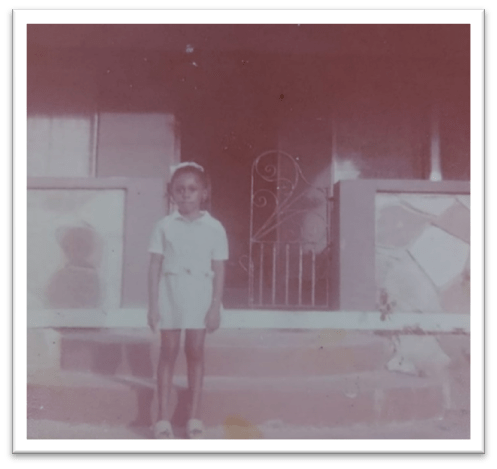
I come from an extended family of Caribbean women who would be called bossy in polite company. They are opinionated and direct and as apt to share their unsolicited opinions as they are to remain silent and leave you wondering what they are thinking. For all their sass, the women in my family are very traditional and would likely be perplexed if you called them feminists. Still, their example made me a proud feminist even before I understood what the word meant.
My first example was my grandmother Ruby. She ruled the roost and dared anyone to defy her. But she was gentle and kind, and she wanted the very best for her family.
Although she had some interesting views on how girls should or should not behave, she was adamant that a woman should not be a man’s showpiece. In her opinion, men and women were equal. Men may work outside of the home, but their work was no more important or valuable than a woman’s work in the house. She was equally adamant that a man should not be allowed to disrespect a woman, no matter his station in life. There are many stories in the family about men who thought they could put my grandmother “in her place,” only to realize that they were no match for her intellect, quick wit, or sharp tongue. For all her views on propriety, my grandmother did not raise traditional granddaughters. Speak your mind! Stand up for yourself! Do not let any man push you around! These were words we heard often.
My second example is my mother. One of my most vivid memories of my childhood is captured in a photo with my sister, cousins, and aunts. I was about eight years old, and while I don’t recall the occasion, I remember that we were all supposed to dress our best. In that photo, my sister and female cousins are in pretty dresses with knee-high socks and patent leather shoes, and then there was me – in my clogs.
My grandmother was mortified. She felt that my mother was being too liberal in her parenting for allowing me to wear my clogs instead of the expected shoes and socks. My mother stood firm; her only response was – “She loves her clogs.”
My mother and I have spoken about this several times over the years. She is still surprised that this event impacted me, especially since she did not view her actions as remarkable in any way. Her response is always the same: but you loved those clogs and were comfortable in them.
That moment was more than my mother consenting to the fashion choices of an eight-year-old; it was perhaps one of the defining moments of my childhood. My mother had unknowingly permitted me to be my authentic self and to take up space.
In the ensuing years, I would need the courage of my eight-year-old self to withstand the teasing of friends who thought that my darker skin made me a punch line or that my fashion choices were not in keeping with the latest trends. I would need that courage when older adults judged my outspokenness as rudeness. I would need that courage when harsh words and broken promises left knicks in the armor I had erected to protect a soft heart.
Unknown to my mother and grandmother, their example paved the path for my journey to feminism.
Recently, I have begun to wonder what my eight-year-old self would say to me today. I suspect she would remind me how much I loved those clogs and challenge me to be bold, to lean into my authentic self, and to take up space.